johnnyarcana123 · Oct 01, 2006 09:10 AM
#0 sourceLet's see if I've got this right:
If a plane has made a carrier landing it's good-to-go in the Navy Carrier Classes.
The Jap Baka Bomb made dozens of carrier landings in WW2.
Hmmmm ....
John McCollum
Stuka Stunt Main Forum · 46 of 46 known posts recovered
If a plane has made a carrier landing it's good-to-go in the Navy Carrier Classes.
The Jap Baka Bomb made dozens of carrier landings in WW2.
Hmmmm ....
John McCollum
Incidentally, the proper name should be "Ohka" (the first vowel being a long "o"), meaning "cherry blossom". "Baka" means "stupid", a moniker given to it by Americans. (And it's not "Ohkra", either, as someone spelled it here last year ... that's a vegetable.. [photo not recovered: rofl.gif] )
The "baka" probably came from Japanese-American translators working with the Allies in the Pacific at the close of the war. It means stupid or idiot with overtones of reckless or foolish behaviour.
The weakness of the Okha was in it's delivery method to the target. Once launched under favorable conditions, it was virtually unstoppable and a major threat to Allied warships. This is why the Ryan Fireball and the "Super Corsair" were being given priority development at the close of the war: they were the only fleet defense aircraft fast enough to effect a succesful intercept. The A-bomb ended need for them, and only 66 Fireballs and a handfull of F2Gs were built. Cook Cleland's racers that won the last of the post-War Thompson rophy races were out of that batch.
JAK
Leester
John McCollum
The same people came up with "kamikaze" - apparently the real term was "shinpu". Japanese can be pretty arcane - sometimes there is more than one way to read a word.
I suppose if they really wanted it to be an insult, they would have used "manuke" instead..  "Baka" is actually pretty mild. Like calling someone a "moron".
>The weakness of the Okha was in it's delivery method to the
>target. Once launched under favorable conditions, it was
>virtually unstoppable and a major threat to Allied warships.
>This is why the Ryan Fireball and the "Super Corsair" were
>being given priority development at the close of the war:
>they were the only fleet defense aircraft fast enough to
>effect a succesful intercept. The A-bomb ended need for
>them, and only 66 Fireballs and a handfull of F2Gs were
>built. Cook Cleland's racers that won the last of the
>post-War Thompson rophy races were out of that batch.
Yeah, I'd read about the origins of the F2G, but I didn't realize the FR was designed for the same purpose. The F2G supposedly didn't live up to its promise so it wasn't pushed that hard. Something like 10 production airframes made, plus a few prototypes.
I wonder how the Sea Hornet would have done in this role. I found, to my surprise, that it had a top speed of over 480 mph. Not on the deck, of course, but it had a laminar flow wing and 4000 HP in the nacelles.
"Baka" is actually Beautiful airplane, those of the RAF were it's last piston engine fighters and saw action against Communist insurgent forces in Malaysia in the early '50s. Some of their duties included escorting motor-pans with school children back and forth to school on the rivers. The CTs (Communist Terrorists) would sometimes try and attack these boats and the Hornets would then strike with 60 lb rocket projectiles and 20mm cannon fire.
JAK
JAK
http://www.vectorsite.net/avmoss_3.html
Too bad none exist today. They also saw some action against Chinese YAKs, I think, after the Chinese shot down an airliner off Hong Kong in the 50s.
(Take a look around the site. It's more or less the equivalent of Elevon, for non-American aircraft).
One of Cook Cleland's racers is owned and operated by Bob Odegard, a duster pilot from North Dakota. He brought it to Reno in June for the Pylon Racing Seminar where he used it to get his unlimited air racer's certification.
He also brought it to Reno this fall and raced the airplane, which has won prestigious awards as a museum piece.
It was the first time the airplane had been on the race course in 57 years.
Al Rabe: Can you design a stunt version?
Cy
John McCollum
John McCollum
John McCollum
Ah.. I always wondered about that.
>Zeke, Hamp, Oscar, Tony
Don't forget the Claude. (That sounds French, though..)
Yeah. But that would have been 75 degrees nose down. Probably not fair to call that a landing. I would think that the landing would have to be on a Japanese Carrier, for a Japanese airplane, German Carrier for a German plane, etc.  Steve
Steve
Steve Helmick
Renton, Washington
USA
DONCHA GET IT? Carrier landings by a BOMB!
John McCollum
Actually, a Baka or a Stuka or a V-1 wouldn't be as big a joke as the MO-1.
Hoooo-ha! This really cracked me up! Thanks!
John McCollum
JAK
I guess the Holocaust didn't happen either?
John McCollum
This is NOT the place for this. I wasn't defending any such thing, merely pointing out an irrational reaction- just as your's is.
JAK
The interesting part is that nobody seemed to think or say much about it in the 1955-1965 era, when more actual victims were around. Now, in 2006, 61 years after the war, people are worried about offending somebody with old enemy markings.
Would you care to document that assertion?
This thread was supposed to be a joke, and now we're fighting about war crimes. Sheesh.
Re-learning control line in Brisbane, Australia.
I guess that I really need to do some serious work on my sense of humor. (Get it? This throwaway is a joke, too.)
John McCollum
Sure thing. You can find one reference in this excellent book:
http://www.amazon.com/SUICIDE-SQUADS-Classic-Conflicts-Richard/dp/1840650826
It's in the Epilogue Chapter at the end of the book. It's a fascinating study of all the "special attack" units fielded during WW-2, Japanese, German, Italian, and British. Highly recommended work.
Sorry about the cranky tone of my previous post ... I'd never heard of such a thing and it somewhat shocked me. Although given the treatment our troops received in Changi and on the 'death railway' to Burma it wouldn't surprise me if there was payback.
cheers,
Colin
Re-learning control line in Brisbane, Australia.
Don't let it concern you. I have a tremendous fondness for Australians and considering the horrors the Japanese perpetrated against them during the conflict, one has a difficult time blaming them- they are tough people when wronged.
JAK
The Japanese Gardens in Cowra are a memorial to those killed, and are well worth a visit if you ever find yourself in that part of New South Wales.
cheers,
Colin
Re-learning control line in Brisbane, Australia.
JAK
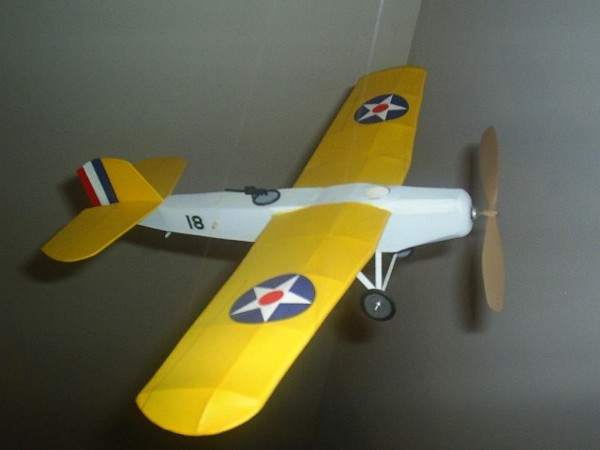
I asked someone once about why it was so popular. Apparently, it's not because of the simple construction. It's the moments.
Memory tells me it never made any actual carrier landings but probably some simulated ones.
The normal mode of operation was to retreive the airplane from the sea after a float landing and winch it back on board the ship.
Hence the comments about the "joke".
I think it's popular for CL Carrier because of it's general layout and high wing configuration which makes it easy to locate controls, fuel tank, etc in the fuselage.
I'm sure there are others her with more knowledge about the full scale airplane but that's a general description.
Randy C
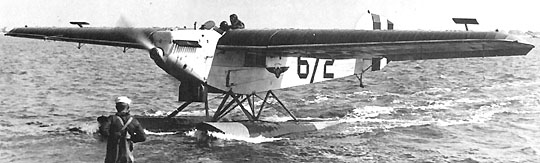
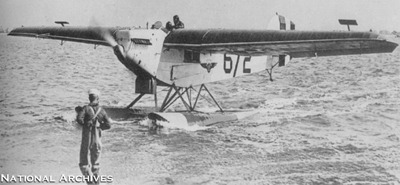
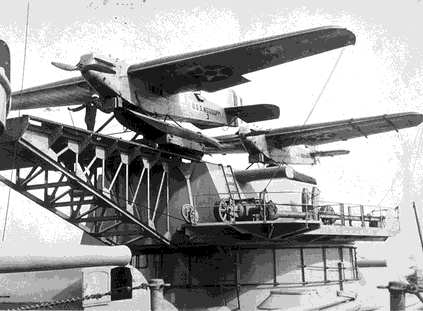
It was flown as much as a landplane as on floats, being designed to readily convert to either set. There is a photo of one touching down on the carrier USS Langley. I think two were attached to her for trials. They weren't very successful, being too large and heavy and somewhat cumbersome to handle aboard ship. They weren't fitted with arresting gear, just flown onto the deck and then the deck crew grabbed on and hauled it to a stop as best they could.
They were the Navy's first all metal monoplanes- 36 were built.
The reasons for the model's popularity were pretty well summed up above.
Randy C
There have been a couple MO-1 articles, one of which was a profile. The shot of it heading in to the deck of the Langely is taken from the side (it was in Model Aviation, in the Carrier column a few years ago), no evidence of any arresting gear at all. There is a good photo of the floatplane version airborne (a side view from below) on page 121 of "American Combat Planes" again- no evidence of a hook or any place to attach one. I think the rules were changed because of this- the MO-1 had become very popular and someone pointed out it really didn't meet the rules (at the time) since it had no arresting gear. The construction article with the photo of the MO-1 was in American Aircraft Modeler, I have the issue somewhere but cannot find it at the moment. It shows the aircraft on the ground from the front slightly off the port quarter, but I sure don't recall any hook under the fuselage. Maybe someone else has the issue handy and can check.
JAK
Scott
(spent more time under a running F-4C than I care to think about, probably the biggest reason I have hearing problems today. Even with protective hearing gear everything in close proximity shakes when running over 80% thrust.)


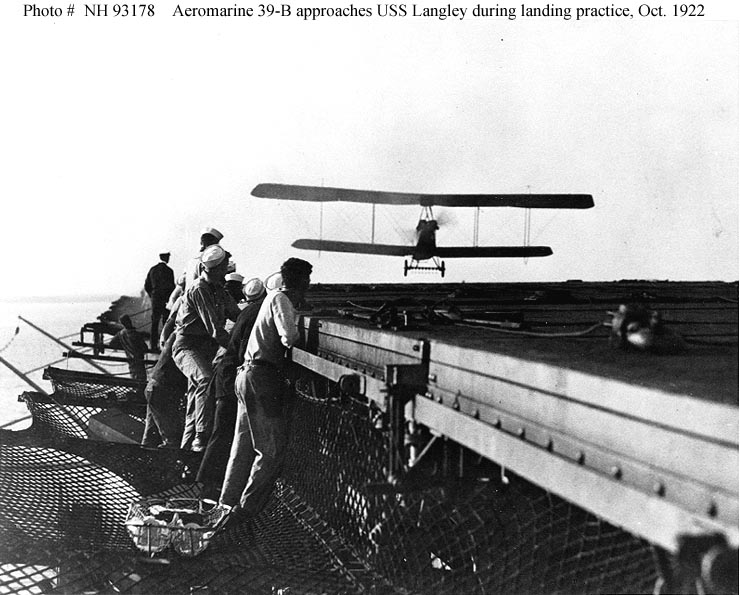
Note the cable "grippers" under the gear spreader bar.
JAK
PS: MO-1 span was 53' 1" and it weighed (landplane) 4642 lbs at full gross. Top speed was 104 mph. No wonder it was a flop. The design was by a former Junkers engineer.
Hmmm.. doesn't display. Site down at this time, perhaps.
>PS: MO-1 span was 53' 1" and it weighed (landplane) 4642 lbs
>at full gross. Top speed was 104 mph. No wonder it was a
>flop. The design was by a former Junkers engineer.
I THOUGHT there might've been some resemblance to a Ju-52, but I figured it must've been my imagination..