Stuka Stunt Control Line Forum
Archive, 2000–2021 · recovered from the Internet Archive
Forums › Stuka Stunt Main Forum

Camaflage paint schemes

Stuka Stunt Main Forum · 25 of 25 known posts recovered

rsmiley · Dec 16, 2003 12:57 AM

#0 source
I have build a Don Stills Stuka. It is now in Polar Gray and To keep it light; ( under 31 oz); I want to add only a darker gray pattern on the topside. It currently weighs 30 oz complete. Since this is my first full body stunt plane since 1957 and only the third plane I have sprayed using a spray gun and brodak/Randolphs dope; I have been stumped as to what kind of paint scheme to use on the topside.

Do you have any suggestions suitable for such a model and perhaps some websites, fotos etc. that I may view and perhaps compliment you on your scheme by copying it. As you can see I am not proud but always willing to learn from others' experiences and mistakes.

Bob Smiley
A Lancair 360 builder/pilot trying to be a modeler.

Bob

Brett Buck · Dec 16, 2003 01:09 AM

#1 source
> As you
>can see I am not proud but always willing to learn from
>others' experiences and mistakes.

Bear in mind - camoflage really works!

Brett

jaco · Dec 16, 2003 03:37 AM

#2 source
>> As you
>>can see I am not proud but always willing to learn from
>>others' experiences and mistakes.
>
> Bear in mind - camoflage really works!
>
> Brett

That's funny and ironic.

Paul Heimgaertner

dhutch · Dec 16, 2003 09:41 AM

#3 source
Not a bit funny if you fly where there are a lot of trees in the background. The airplane simply dissapears from view when below the skyline! Maybe A light desert tan on top would do. Get a Squadron Signal book on the Stuka (if there is one ) and check out the various paint schemes.

Don

gtrbaby · Dec 16, 2003 12:58 PM

#6 source
I went looking for some camoflage pants the other day...but couldn't see any anywhere.

In the battle of airplane V ground, the ground is yet to lose.

Larry Fernandez · Dec 16, 2003 01:20 PM

#8 source
Brett is right . The point he is making is that the plane will be hard to follow with some backgrounds. I could not fly my P-40 at Reid Hillview Airport because of the trees surrounding the field I'm not kidding, sometimes the plane would dissappear only to reappear about three feet from the ground. Think about it. By the way Bob, Phill Juarez is making up a set of decals to replicate the Ambroid Stuk Stunt decal sheet. Should have them any time now. Larry, NorCal Circle Jerks.

Randy · Dec 16, 2003 09:56 AM

#4 source
Bob,

Here you go.

Randy Powell

Ty Marcucci · Dec 16, 2003 12:16 PM

#5 source
The nice thing about scale type PA planes is the markings. Al Rabe used his initials as have others on the side. WAR, TAM, etc. The British and early Yank squadrons use a three letter group to id the squadron and the individual aircraft in the squad. So, you can use your two or three initials as well. Just a thought.

Rick · Dec 16, 2003 01:09 PM

#7 source
LAST EDITED ON Dec-16-03 AT 01:12 PM (CST)
 
Mat has built a bunch of cool looking Stukas that are pictured on Len's web page and Bob Whitely's son flew one at the NATS a few years ago that looked really neat with a red and white snake painted down both sides of the fuse. I bet someone has a picture of it.


Rick Henry

Iskandar Taib · Dec 19, 2003 05:54 AM

#18 source
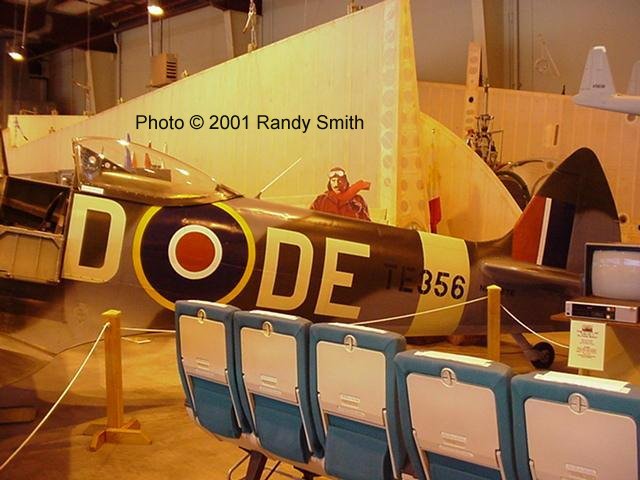
British and American squadrons operating in Europe used two letters (and later, numbers were added) to designate the squadron and another letter for the individual airplane within the squadron. In other theaters, and in FAA squadrons, this might not have been the case. Certain high ranking individuals (Wing Commanders and above in the RAF) would often use their initials (a practice started by Douglas Bader).

gtrbaby · Dec 16, 2003 02:26 PM

#9 source
or how about this one....

In the battle of airplane V ground, the ground is yet to lose.

builditright · Dec 16, 2003 02:41 PM

#10 source
here's a nice one from the profile book on the stuka

Thank You and God Bless
Walter Umland
aka / builditright
My temporary email is: [email protected]
http://www.builtrightflyright.net

Currell · Dec 16, 2003 04:08 PM

#11 source
My Still Stuka is in a dark green motif, with the yellow trim on the tail.

I think Matt and Len have a Distemper White on at least one of their SSW Stukas. Help me here, Mr SSW...

BB is right re the camo working. I copied what the Rooooskies did on a Sterling Yak.

Too good a job; I almost step on it every time it is at the Old Flying Field.

Or, maybe it is just a Freudian thing, since it doesn't fly very well (awful flap gaps, leaden controls, etc).

Currell

rsmiley · Dec 16, 2003 09:26 PM

#12 source
Thanks fellas for your input,


Larry, tell Phil I had stencils cut from 3 mill vinyl. Believe it or not in this small town of Kingston there is a graphics design shop that will set up any stencil for $10 bucks and cut stencils for the cost of the material. I had four different image setups and cut 6 iron crosses of two sizes, one ama number set, two swastikas, and two sets of plane numbers for about $44 bucks. great deal.

Yes, It would be discouraging to have your plane disappear for one tenth of a second in the vertical. Hmmmmm let's see, at 60 mph that is 88 feet per second. In a dive that is 8.8 feet for a tenth of a second. If you lose it at ten feet and have perfect reflexes and instantaneous turning capability the plane recovers at 1.2 feet AGL(above ground level)

I have painted the rudder yellow. There is a white band around the aft fuselage with the iron cross painted on it. Tho not true to a single camoflage skin it is a collection of images from two different Stukas.

Desert sand might be appropriate. Not too many contests in the desert. at least you see the plane against vegetation and the sky.
Yes, I did see the snake before. Very interesting but who has time for that kind of art work. We leave for Tuscon after Christmas and I want to fly Lancairs and model planes.

I have desert sand and can two tone it by stepping on the paint with some black.

Any pattern suggestions?

I will continue to look for more suggestions.


Bob Smiley
A Lancair 360 builder/pilot trying to be a modeler.

Bob

LNeumann · Dec 16, 2003 10:47 PM

#13 source
>I have build a Don Stills Stuka. It is now in Polar Gray and
>To keep it light; ( under 31 oz); I want to add only a
>darker gray pattern on the topside. It currently weighs 30
>oz complete. Since this is my first full body stunt plane
>since 1957 and only the third plane I have sprayed using a
>spray gun and brodak/Randolphs dope; I have been stumped as
>to what kind of paint scheme to use on the topside.
>
>Do you have any suggestions suitable for such a model and
>perhaps some websites, fotos etc. that I may view and
>perhaps compliment you on your scheme by copying it. As you
>can see I am not proud but always willing to learn from
>others' experiences and mistakes.
>
>Bob Smiley
>A Lancair 360 builder/pilot trying to be a modeler.

The original Don Still Stuka was all Black. Although the original off of which it was copied was a dark green, he used a black and white photo and it looked black. There were a number of colerful paint schemes, however, including a green camoflage and a desert scheme. Here are a couple of pictures of the surviving menbers of Matt's Stuka fleet. Unfortunately, three of the planes did not survive the war and are now missing from the photo.

Leonard Neumann

builditright · Dec 16, 2003 11:44 PM

#14 source
LAST EDITED ON Dec-19-03 AT 00:09 AM (CST)
 
ach tung!

( if thats how its spelled?)LOL !

thanks
got half of it right
must be the German half. LOL !

Thank You and God Bless
Walter Umland
aka / builditright
My temporary email is: [email protected]
http://www.builtrightflyright.net

rsmiley · Dec 17, 2003 02:10 AM

#15 source
That is "Actung" without the space. translated Attention.

Change of plan. Decided to use polar gray on the bottom polar gray and a darkened polar gray on top. White canopy with black framing, yellow rudder.

What is your experience with gray airplanes with respect to visability?

Bob Smiley
A Lancair 360 builder/flyer trying to be a modeler

Bob

Randy · Dec 19, 2003 12:28 AM

#16 source
Bob,

Should be interesting in Albany. You may remember what the sky looked like last year.

Randy Powell

Steve Helmick · Dec 19, 2003 12:49 AM

#17 source
You might paint the cowl or wheel pants yellow...wingtips, too. Tho I don't understand the logic of a camo airplane with red or yellow trim. 1:1 Scale, that is. You shoulda gone with a Reno Racer paint scheme...purple, yellow, checkerboards, flames, etc. Steve

Iskandar Taib · Dec 19, 2003 06:03 AM

#19 source
LAST EDITED ON Dec-19-03 AT 06:04 AM (CST)
 
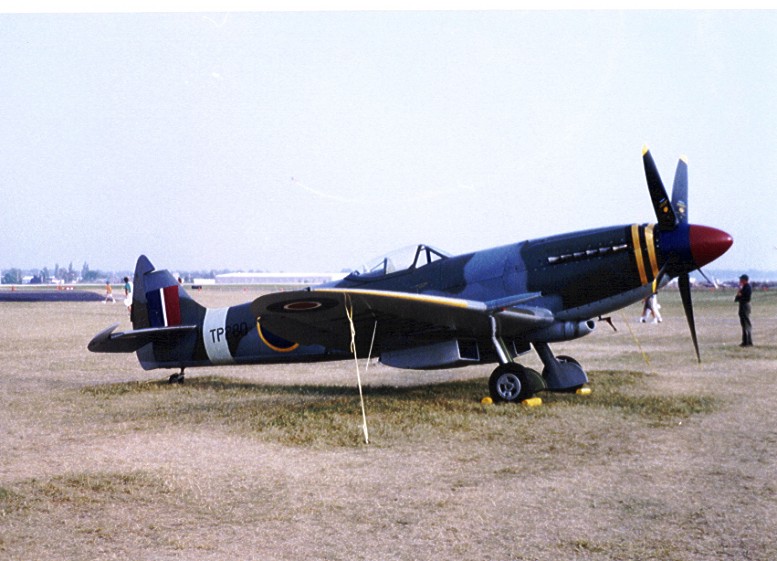
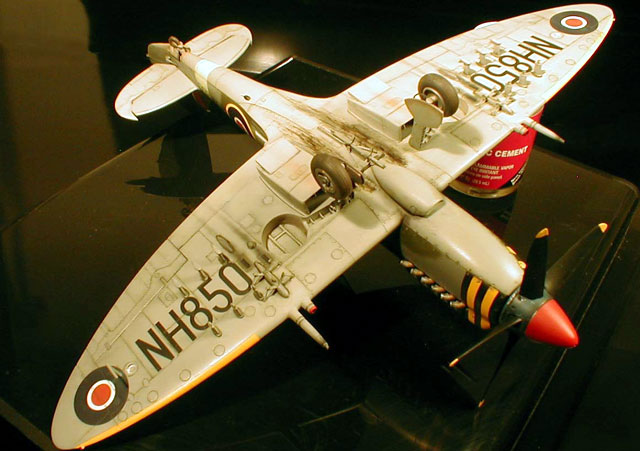
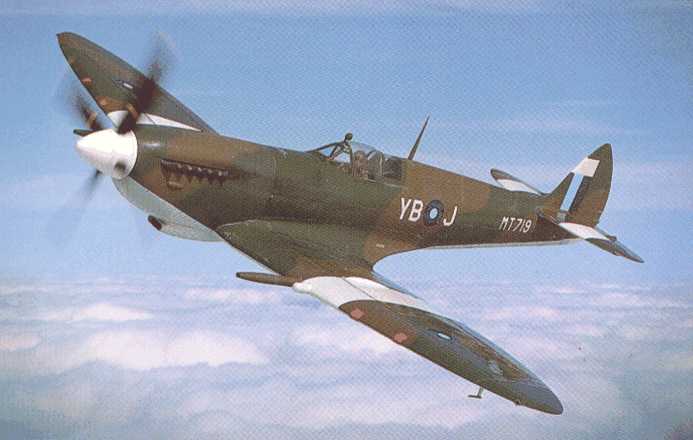
British fighters in Fighter Command (i.e. operating out of Britain before the Invasion) used yellow along the leading edge and around the fuselage roundels. Along with the vertical white stripe near the tail, I think these were to help with identification. What I wonder about is why they changed from the Dark Earth/Dark Green scheme to Grey/Dark Green in 1942.

Al Rabe · Dec 19, 2003 09:42 AM

#20 source
LAST EDITED ON Dec-19-03 AT 09:43 AM (CST)
 
Isky,

The vertical band on the rear fuselages of British fighters was "Sky", kind of a light greenish blue, not white. Most used Sky on the entire bottom.

Al

Iskandar Taib · Dec 20, 2003 11:25 PM

#21 source
Hmmm.. This might indeed be the case.. I thought they simply used the same paint they used to apply the markings for the band, which would have been white.

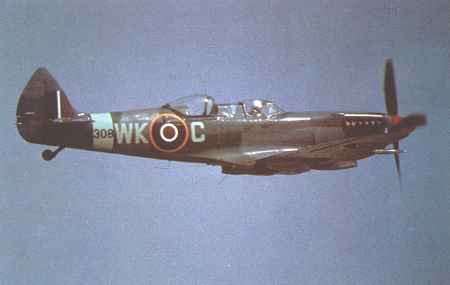
I had a look around the Web for Spitfire pics (below) and it does seem that the band is lighter than the underside of the airplane.

I've seen the underside color referred to as "Duck Egg Green" (Airfix kits).


[photo not recovered: spitfire2.jpg]

Incidentally, the Far East markings were completely different:

Currell · Dec 20, 2003 11:39 PM

#22 source
Len: Enjoyed looking at your fleet of Stukas. Let's invade the Ukraine, or something.

Also reminded me that over a dozen Stukas got the record for the greatest non-war (or maybe including war) mass crash in history. Well over a dozen at once. During a training exercise, right before the War.

Currell

Al Rabe · Dec 21, 2003 08:58 AM

RE: Camouflage paint schemes#23 source
LAST EDITED ON Dec-21-03 AT 09:34 AM (CST)
 
Isky,

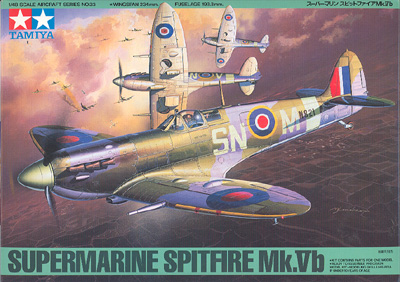
The photos you show are all later Marks of the Spitfire introduced after August of 1941. Until 15 Aug 1941 most fighters were painted with spinners and undersides all Sky and all fighter aircraft carried 18" Sky bands just forward of the tailplane until late in the war. In Aug 1941, fighter Command specified the new underside color would be Medium Sea Grey. Sky spinners and fighter bands were retained. As you point out, it would be logical to paint the fuselage code markings the same as the Fighter band. They were. For most of the war the fuselage code markings were also painted Sky, even after the lower fuselage changed to Medium Sea Grey, Refer to the second and fourth photos you posted.

"Royal Air force pilots found themselves at a disadvantage in combat in aircraft painted in the Dark Green/Dark Earth/Sky combination of colours. the upper surface colours looked predominantly brown from a distance and were too dark at the higher levels of combat. The under surface of Sky was designed for use up to around the 10,000 average combat height of 1940 and was too bright and reflective at the higher altitudes.

The Yellow stripe along the wing leading edge was also added with the 15 Aug 1941 change of markings. Notice, my illustration with the Sky undersides has no Yellow stripe on the wing leading edges.

Al

Ty Marcucci · Dec 21, 2003 01:46 PM

#24 source
In the air with glare, clouds, haze, etc, those colors will blend. The markings are not truly visible until inside gun range. At a distance it is hard to see markings of any type, but the basic outline of the aircraft. Many of the early fighters looked very much alike at a distance, especialy to a new pilot. I had trouble even with 20-15 vision and excellent color perception in recognizing other aircraft in the air, including those I had flown. And these are just a bunch of 152/172 local training planes in the local area. I can't imagine being at 10,000 at 300 plus knots in combat trying to id some plane. If it comes at me, shoot. ?? The same at sea looking at ships of the same squadron, that big number on the bow is not visible without binnoculars. Many don't realize how the sea/air affects vision, unless you have been out there.