>A couple of questions for Len. (snip)
>What's the weight difference between the stock .20 muffler
>and the tongue muffler?
OK, without bolts the stock muffler is 62 grams or 2.18 ounces.
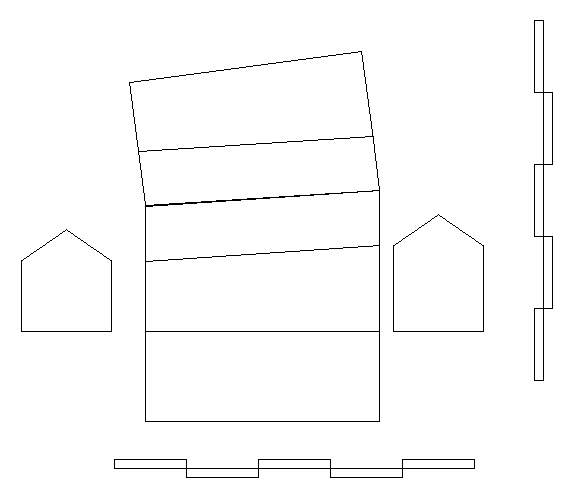
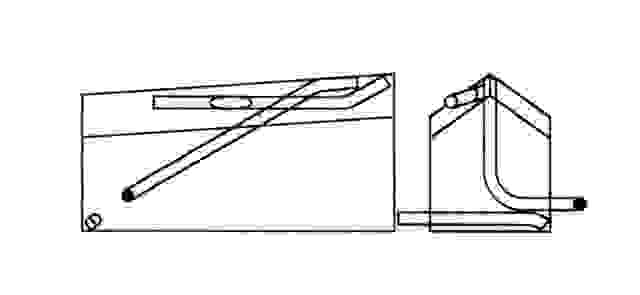
I have two tongue mufflers available, both of which are pretty hefty.
One os made by Art and is a little shorter and blends more with the contour of the exhaust and case finish.
The other is custom CNC made and has a larger chamber.
Both weigh 14 grams without bolts or about .49 ounces.
In addition I now have some light weight tube mufflers that are not cheap, but are CNC made and weigh in at 34 grams or 1.16 ounces.
And for ultimate lightness, there is the RSM tongue muffler that Dan was using. I don't like these as well as they are a bit flimsy, but they weigh in at about .3 ounce.
So, with a good tongue muffler we can take over an ounce and a half off the nose of the plane. If you need the weight, well, maybe it doesn't make any difference running the stock muffler. If you don't, and need tail weight to balance, then you are adding even more unneeded weight and to the extremeties, at that (bar bell effect)
>You've commented several times re the "correct" choke
>area/venturi for various engines. Can you elaborate on the
>method and basis for determining that dimension? (snip)
This is a formula that Pat Johnston had sent to me one day for my opinion. I had been developing venturi sizes that "worked" for various engines without paying too much attention to formula, but, when comparing these to the formula he sent me, I had to agree that this worked.
Now this works for stock engines, such as Brett is running. "Trick" engines will start to leave the pattern. And I guess running the draggy, choked down stock muffler already puts this engine into the "trick" category because even Brett and Dan and others agree in saying you need to put a smaller venturi on the .25 than on the .20. It seems odd, doesn't it?
Now, before going to the formula, I want to mention first those engines that go out of the range. George Aldrich would modify engines by changing the timing to reduce blow down, hogging out the head to reduce compression, and then opening up the venturi to regain part of the power that was lost. Coincidentally, the Fox 35 follows this same pattern and its venturi size falls outside the range. The larger venturi on the Fox regains some of the power lost in timing, compression, etc., and also reduces suction causing a quicker, sharper break.
Oh, and Paul Walker went the other way with the venturi on the ST 60, for instance. He used a smaller than normal venturi, but then, he was using a much smaller prop than what the ST 60 could reasonably be expected to turn. With less load, he needed less venturi.
So, what we are talking about is a venturi in a normal range that enables the engine to behave normally for what would be expected to be props that it is capable of turning. For smaller props, go to a smaller venturi. For larger props, go to a larger venturi (within reason). And, for less choke in the exhaust go to a smaller venturi. For more choke in the exhaust go to a larger venturi. This is what Brett is doing.
Now, the formula is this: Take the effective choke area (area of the venturi at its smallest point minus any restriction caused by a protruding needle) divided by the cubic inch displacement of the engine, and the "normal" result would fall into the .045 to .052 range. I want to emphasize that this is for stunt engines in stunt trim that are not "tricked" up in some way. We are not talking speed or combat, and we are not talking about every tricked up engine.
Now, if you go to more exhaust restriction you will need either to go to a larger venturi or a smaller prop. Or, if you go to more load (larger prop) you may need to go to a larger venturi. And if you go to a smaller load, you may need to go to a smaller venturi (Paul's solution on the ST 60).
When Matt went from the 61 size pipe to the 65 size pipe on the PA 61 it allowed him to put a bigger load on the engine (larger prop) while using the same size venturi. The pipe length and rpm remained the same, however. Or he could have used the same prop and gone to a smaller venturi. And with the .65 engine he can use a little larger venturi because it is a little larger engine. That's why I get confused when people say the stock venturi on the 20 is OK, but the 25 has too much power with it so you have to go to a smaller venturi. You can do the same thing with the 20 when you decrease the restriction in the muffler.
Oh, and how does the formula work? Well, the stock venturi on the 40 FP is a .265. With its .135 needle, this gives a choke area to displacement ratio of .048 (formula .045-.052) OS has been all over the place with their venturis on this engine, but here they did something close to right. Unfortunately they used the same venturi on the stock 35 and the first 46 LA. The LA is a "tricked" up engine (no boost port) and that venturi has been correctly getting progressively larger.
How about the ST .46? Nothing tricky here. Brett recommends a .173 venturi (choke/displacement = .051)
What does Matt use on his PA 61 with a pipe?
for cool weather .189 (choke/displacement = .046)
for warmer weather (most summer conditions) .193 (choke/displacement = .048)
for real hot weather (approaching 90 degrees or above) .196 (choke/displacement = .0495)
You will note he is not pushing the max even with his large pipe. But then, that pipe is very non-restrictive. And it is also possible when the weather heats up at a contest, for instance, to simply go to higher per centages of nitro from his normal 5% to compensate for the smaller venturi. So you can add nitro when the weather heats up instead of going to a larger venturi. When the weather cools, however, then you need to choke it down.
Just remember, this is a starting point and works well with stock, non "tricked out" stunt engines. If you do something to kill the power, open the venturi. If you want and can take the extra power without it running away, open the venturi. I can open it more on my modified engines simply and only because they have better crankcase compression forcing the fuel up, and are limited, with the lack of a boost port, from runing away. But they are also set up for ideal deck heights and such with that type of set up to allow them to produce more power.
However, I will emphasize this once again, the argument was never about my modified engines verses Brett's stock engine. Only a matter of putting less restriction on the muffler (with its accompanying less weight) and moving to a smaller venturi.
>On the surface it seems as though you are as adamant about
>"correct" choke area as you accuse Brett of being regarding
>his preference for the stock components.
Well, yes. If you don't have the correct size venturi, the engine is never going to run properly. This is true if it is too small or too large. If you put a less restrictive pipe on the engine you need to go to a smaller venturi or a larger prop. This works the same with a muffler. I might add we put a "rubber duckie" on the muffler on Matt's 35 ship once to try to deflect the exhaust off of the wing. It didn't work. It was too restrictive. We had to take it off. We could have tried a larger venturi, I guess, but didn't feel like messing with something we didn't have to. Besides, it added weight.
>What is the driving force and perfomance expectation
>for modifying the engines to meet your preferred specs?(snip)
I am a guy who likes to fiddle. I like to see where I can make improvements. Matt likes to fly. He doesn't like to tinker. But he does like the improvements that result.
Many years ago Art modified a 35 FP for us that we were using and it totally changed that engine and our outlook on how those things could be made to run. I had another "noted" reworker do a 40 FP for me and he destroyed it. It almost had the power of a Fox 35. (Almost, not quite) But the comparison was dramatic. We later blocked the boost port on that engine and brought it back to life. We changed out the piston/cylinder that he had butchered and made it into one fine engine. (And, no, don't ask me who it was.) I later did some experiments with the 35 and found that by going just ten thousandths too far in timing changes made a difference between turning an 11 inch or a 12 inch prop. Sometimes you have to destroy parts, but that is how you determine where to set it.
Art did a muffler for us for that engine that didn't work. He made another that was just a quarter inch longer and it did. The first worked on a stock engine, but had too much restriction once it was modified. (And, no, it wasn't a pipe, because a tongue muffler would also work.) At that time Matt and I were both flying and we could feel the dramatic difference that going to that 12 inch prop made (especially compared to the stock engine running high rpm with a 10 inch prop). We later did some comparisons with modified Fox 40s and then went into the Magnum engines. We tested engine configurations. I did some tests on mufflers. There were some interesting results. And I want to put something up about that when I get time, because I tested length for tubes and number of holes for tongues, all of which is pertinent to this discussion.
We did some testing of head shapes for Lew Woolard at one point. And just minor differences in head shape could sometimes make dramatic differences in performance. You can't just take a dremel tool, grind a little, and say "That takes care of that". Everything was measured to the thousandth of an inch. But, this is also interesting, because it is not unusual for stock engines to vary in deck height by as much as 6 or 7 thousandths, and I have had a couple that were over 15 thousandths off. So much for "stock" engine.
>And ... again not trying to be a smarty pants ... , on what
>emperical basis do you support your preference for modifying
>the engine. Have you flown (or had Matt fly) .20 powered
>aircraft with the engines in various configurations or is
>your point of view driven by a conviction to the principles
>you've developed regarding what is and is not "correct"
>regarding choke area?
Neither Matt nor I have ever flown a 20 FP. I have modified a number of 25 FP engines (and Thunder Tigers) using the same principles as on the 35. But I have not done as extensive of a program on these as I have on the others because the bigger ones were flown by Matt in competiton and we have thousands of personal flights on them. The 35 and 40 FP engines were identical except for the bore size (and larger inlet ports in the sleeve on the 40) The stroke and timing, etc., are the same. The 25 FP is kind of a scaled down "middle ground" between the 35 and 40. I always found that interesting. So I just scaled it down proportionately in what I did to it.
But again, I never said "let me modify a 20" for comparison. (I don't even have one.) Although from experience with other engines, I am confident I could improve it for stunt purposes compared even to Brett's set-up, my comments have only been directed towards going to a lighter, less restrictive muffler and accompanying smaller venturi.
>Lastly, has your developmental work been restricted to
>larger bore engines? I know you've a well earned reputation
>for building good mid size engines -- .35s and .40s -- but
>have you done enough work on engines of this size to be
>confident in your assessments?
I have already told you that I havn't done 20s, but the principles remain the same. There are no surprises in the design (like the wider inlet ports on the FP 40) to cause problems. Timing is still a matter degrees. Principles on venturis and compression remain the same. I have never found a head shape that worked better on these engines (as I modified them) than the stock one, so it is simply a matter of setting correct head height to go along with your modifications. Oh, and when we did the head tests for Lew Woolard and sent him the data, he came up with a deck height that he felt was best and we came up with a deck height that we felt was best and we were one thousandths of an inch apart. That was not enough of a difference to worry about, but it was an interesting result. Basically we came to the same conclusions. Lew continues to work on his stuff, by the way, and continues to improve it over the years. I think this is key to knowing what you are doing.
>We all know that a 1/2A must pretty much be run peaked out
>to get any sort of performance out of a stunt airplane. We
>also know that big bore stuff is happy as a clam flying
>pretty gross large stunters in a loafing four cycle.
>Somewhere in between these extremes is a cross over point
>where the engines and the appropriate configurations for
>stunt metamorph from one type to another. My experience is
>that cross over occurs in the Class A range about which
>we've been debating.
>
>In other words, I believe the .20s etc, fundamentally
>require a different approach to doing the work we need done
>than do motors almost twice as big in displacement. (snip)
I grant that 1/2 A engines are a different animal, but great gains are being made in these engines these days as well. The day that the TD engine dominated are long over, and the new Schnurle engines have become king. But I am sure that even these could be modified to make them into a better stunt engine. It may be, however, that one would need to replace the cylinder as is done when converting the Nelsons (PA) or Jetts (RO-Jett), along with the heads and venturis to make them into a truly improved stunt engine. I don't know. I have never explored this and truly have neither the time nor desire. However, I don't think the 20 or 25 FP are any different from the norm of the larger engines. I generally have stayed with the 25 simply because it is based on the same case and gives 25% more displacement for the same size/weight. Even here, cubic inches rule.
>I still think the "challenge" would be a great deal of fun
>and informative for all of the SSW crew. I'm serious about
>purchasing a .20 built to your configuration and I think the
>ARF Flite Streaks would be an ideal and inexpensive vehicle
>on which to make the comparisons.
>
>How much $$$$
>
>Ted
How about ten thousand dollars? (Might as well be dumb here.) I agree it would be fun and informative for us all. I don't even have a 20, however, stock or otherwise, and, as said, haven't worked with it enough to know what would be the best prop, etc., to use in comparison. I wold not only need to rework the engine (which would not be difficult) but would also want to make sure that I had the absolute best prop for the engine, etc. Brett's engine would not run properly on the prop I would choose, and mine would not run as efficiently on the prop he would choose.
And it is a dead engine. So, if I did put development time into it, I don't know what purpose it would serve. But, as stated, that wasn't the issue anyway. We were only supposed to be talking mufflers and venturis. (Still, you are willing to buy the plane AND the engine, and let me use this for development before sending it to you, and...)
See you in Muncie. Bring home the gold for the US.