Stuka Stunt Control Line Forum
Archive, 2000–2021 · recovered from the Internet Archive
Forums › Stuka Stunt Main Forum

Rotating Cylinder Valve engines

Stuka Stunt Main Forum · 18 of 18 known posts recovered

Larry Cunningham · Aug 04, 2004 07:56 PM

Rotating Cylinder Valve engines#0 source
Just reading the latest Model Aviation Engine Shop column, wherein Joe Wagner talks about the new Rotating Cyclinder Value engine, from RCV Engines, UK.

[photo not recovered: 411181f57596e05d.jpg]

It's really an interesting design! Looks like the 60 version of it produces .9 HP, weighs 20.7 ounces sans muffler. It's a 4-stroke..

Yes, that's the shaft coming out the top of the cylinder head! In case you're wondering how they do that - here's the cross section of the engine:
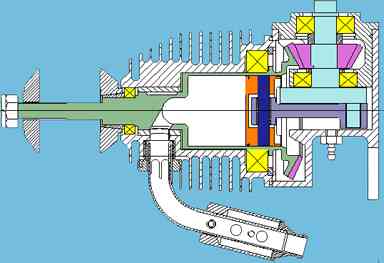
It has a 2-1 built in reduction on the output shaft, maximum RPM is 6000.

They also make a "conventional" engine, using the same RCV technology, here's what it looks like (.58 version):
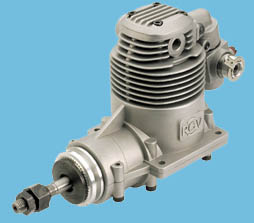
That engine is a bit lighter and less powerful, but still interesting.

Considering the growing popularity of 4-strokes in CL stunt, and the innovation of these designs, I'm curious as to what more experienced readers think about this?

[photo not recovered: 3e69bb3870f12ad5.jpg]

"He who conquers himself is the mightiest warrior." -Confucius

peabody · Aug 04, 2004 08:17 PM

RE: Rotating Cylinder Valve engines#1 source
Larry...Zed-man has been fooling with these, I think....

See Ya

Peabody

Max1998 · Aug 04, 2004 08:45 PM

RE: Rotating Cylinder Valve engines#2 source
Hello a friend of mine has the 60 in a R/C J3 Cub.The engines are a 2-1 reduction so it spins a big high pitch prop at half of engine speed.Dont think it would make amuch of a stunt engine but it sure makes a nice motor in a scale ship.I think it was Randy Powell that tried the 58 ?I could be wrong it has happened before.

Dennis Pedersen

Steve Helmick · Aug 04, 2004 09:15 PM

RE: Rotating Cylinder Valve engines#3 source
Yup, Randy flew the .58 last year. Until it barfed, after a dozen or so flights. AFAIK, it hasn't been flown since. Hard to beat proven concepts. Steve

dhutch · Aug 04, 2004 09:45 PM

RE: Rotating Cylinder Valve engines#4 source
Larry- I got a call from Fred Bachl about an hour ago, he is trying to reach you. Maybe give him a call? He thought as Dist 8 rep I would know how to contact you. Apparently the phone # he has doesn't work.

Don

F4FGuy · Aug 05, 2004 06:31 PM

RE: Rotating Cylinder Valve engines#6 source
Hard
>to beat proven concepts. Steve
>
>http://www.nwskyraiders.com/index.html

Ron B.
F4Fguy

Of course it is. They're proven!

Not too long ago the four stroke was an unproven concept in PA,not long before that,the pipe,ABC,ABN,AAC,carbon prop,uniflow, muffler pressure,flaps,solid lines,stranded lines,solid lines,bellcranks.............................................

Ron B.

Rustler · Aug 05, 2004 04:36 PM

RE: Rotating Cylinder Valve engines#5 source
I bought one of the 58's to assess practicality for stunt. Clubmates tried it on the bench and found hand starting not too good, although who knows, with practice....? They thought it's best use was as a good R/C engine. I notice it is covered by various patents, which confuses me. Haven't engines using this principle been around for yonks?

Ian R.

Iskandar Taib · Aug 06, 2004 05:13 AM

RE: Rotating Cylinder Valve engines#7 source
Not really. The full-size sleeve valves worked differently - they didn't turn continuously in one direction. Instead, they were connected to a crank that made them go up and down as well as rotate in a small arc.

dirtydan · Aug 06, 2004 02:05 PM

RE: Rotating Cylinder Valve engines#8 source
They also make a "conventional" engine, using the same RCV technology, here's what it looks like (.58 version):

That engine is a bit lighter and less powerful, but still interesting.

Considering the growing popularity of 4-strokes in CL stunt, and the innovation of these designs, I'm curious as to what more experienced readers think about this?

"He who conquers himself is the mightiest warrior." -Confucius

Larry,

Randy Powell took what I thought was a really good shot at making the "conventional" 58 work in a CL Stunt application. Not promising enough to continue, at least one pretty significant bearing failure not helping things any.

My view of four-strokes in general is that at upper levels of CL Stunt in the U.S., four-strokes have not lived up to expectations and/or advance billing. While I continue to fly one each of Saito 56 and 72--and am *hardly* in upper levels of Stunt, please note--bloom is off the rose and I'll be going back to two-strokes with next PA model.

While it may be weird, and I don't expect anybody to fully understand, nor do I ask them to, hours and hours of fiddling around with the **banned subject** small-bore engines from O.S. taught me quite a lot and thus I began looking slightly askance at both of my Impacts.

I do see 40-size four-strokes gaining more acceptance in 35-40 size models destined for local-contest usage. Nice packages result when mating some older designs with an engine which requires less fiddling, is more tolerant to prop selection, as one example, and is quiet. Just don't expect to dust off any of the Top 20 boys with it...

Dan

EricV · Aug 07, 2004 10:13 AM

RE: Rotating Cylinder Valve engines#9 source
Just remembered where I saw it. See your Sept/Oct last years Stunt News, Brodak's results for Expert Profile. Looks like Danny Banjock did OK with one in "The Plane". Maybe this was a joint effort with the Z-man? I admit this is misleading though, since Danny B. could probably fly a watermellon with his rope belt and a black widow for power and still do well at a contest with it...LOL.
Will post a scan/pic, hold on....yup here we go.
Eric Viglione

Steve Helmick · Aug 08, 2004 12:03 AM

RE: Rotating Cylinder Valve engines#10 source
LAST EDITED ON Aug-08-04 AT 00:08 AM (CDT)
 
Ron B.wrote: "Of course it is. They're proven!

Not too long ago the four stroke was an unproven concept in PA,not long before that,the pipe,ABC,ABN,AAC,carbon prop,uniflow, muffler pressure,flaps,solid lines,stranded lines,solid lines,bellcranks.............................................

Ron B."

My intent was to compare this flaky 4 stroke to the proven cam and poppet valve system as used by Saito, OS, Enya, etc. I can't think of any 4 stroke of historical significance that did not follow this basic layout, with pushrods or OHC. I guess you could point to current F1 engines with computer controlled, electrically operated poppet valves, but that's hardly appropriate technology for our use.

Da Dirt wrote: "My view of four-strokes in general is that at upper levels of CL Stunt in the U.S., four-strokes have not lived up to expectations and/or advance billing. While I continue to fly one each of Saito 56 and 72--and am *hardly* in upper levels of Stunt, please note--bloom is off the rose and I'll be going back to two-strokes with next PA model. Dan"

So, Dan...are you going back to ST G.51's, or is there something schmantzy in your future? Based on your <(.19 + .21)/2>FP revelations, I expect to see a .40VF powered, scaled up, full fuselaged Skyray with a thicker wing. Steve

F4FGuy · Aug 08, 2004 01:12 AM

RE: Rotating Cylinder Valve engines#11 source
>My intent was to compare this flaky 4 stroke to the proven
>cam and poppet valve system as used by Saito, OS, Enya, etc.
>I can't think of any 4 stroke of historical
>significance
that did not follow this basic layout, with
>pushrods or OHC. I guess you could point to current F1
>engines with computer controlled, electrically operated
>poppet valves, but that's hardly appropriate technology for
>our use.
>

Ron B.
F4Fguy

And my intent was to point out that all these other ideas were "flaky" until they became "proven".Personally,I don't think much of the RCV concept either.I don't see how they can get reliable cooling with all that monkey motion machinery between the inside wall and the cooling fins,and the attendant heat barriers associated with the required clearances.On the other hand conventional four strokes as presently available for the PA application are equally crude devices.Do they do the job? Maybe.Are they state of the art engines? Not by a long shot. As to your question re historically significant sleeve valve engines,I'd have to think the Bristols of WWII were of some importance. There are lots of reasons certain ideas don't become common practice and,more often than not,those reasons have nothing to do with feasibility or practicality.They usually have to do with resistance to new ideas by the buying public,and to a lesser extent to the requirement of retooling manufacturing facilities to produce the new product.

Ron B.

bkruger · Aug 08, 2004 08:32 AM

RE: Rotating Cylinder Valve engines#12 source

>historically significant sleeve valve engines,I'd have to
>think the Bristols of WWII were of some importance. There
>are lots of reasons certain ideas don't become common
>practice and,more often than not,those reasons have nothing
>to do with feasibility or practicality.They usually have to
>do with resistance to new ideas by the buying public,and to
>a lesser extent to the requirement of retooling
>manufacturing facilities to produce the new product.

Ron;

I might be wrong, but I trecall it was Hawker that used the Napier sleeve valve engines in their Tempest/Typhoon series. Didn't Bristol stick with radial engines? I am really digging here, but the Tempest II had a Bristol Centaurus radial engine as an alternative to the Napier, as the Napier had a signifigantly long teething period.

V/r

Bob Kruger

F4FGuy · Aug 08, 2004 02:33 PM

RE: Rotating Cylinder Valve engines#13 source
LAST EDITED ON Aug-08-04 AT 02:54 PM (CDT)
 
>I might be wrong, but I trecall it was Hawker that used the
>Napier sleeve valve engines in their Tempest/Typhoon series.
> Didn't Bristol stick with radial engines? I am really
>digging here, but the Tempest II had a Bristol Centaurus
>radial engine as an alternative to the Napier, as the Napier
>had a signifigantly long teething period.
>
>V/r
>
>Bob Kruger

Ron B.
F4Fguy

Bob:

True,the Bristol Hercules,Taurus,Perseus,and Centaurus were all radials.They were used in a number of aircraft,the most significant probably being the Beaufighter and Tempest II during the war,and Fury and Sea Fury postwar. All of them were also sleeve valve engines.

As you said,the Napier Sabre was also sleeve valved.It did have teething problems,but was well developed by the time the Typhoon was put in production.In fact it's reliability and low maintenance were the primary reasons the the Typhoon was chosen for production over the Tornado.

Ron B.

bkruger · Aug 08, 2004 07:52 PM

RE: Rotating Cylinder Valve engines#14 source
LAST EDITED ON Aug-08-04 AT 10:28 PM (CDT)
 
>
>True,the Bristol Hercules,Taurus,Perseus,and Centaurus were
>all radials.They were used in a number of aircraft,the most
>significant probably being the Beaufighter and Tempest II
>during the war,and Fury and Sea Fury postwar. All of them
>were also sleeve valve engines.

And, you are correct. I had forgotten about sleeve valved radial engines. Bristol was quite successful with them and I think got up to about 2500 HP from the largest.

For some reason, I thought that British rotary valve design work had begun with Daimler motor cars and ended with Napier, and I left out Bristol radials. Mea maxima culpa.

>
>As you said,the Napier Sabre was also sleeve valved.It did
>have teething problems,but was well developed by the time
>the Typhoon was put in production.In fact it's reliability

Not really. The Napier still had a lot of problems in late '41 and like the rest of the Typhoon (most notably the tail section failing during a high speed dive), was rushed into service too quickly to deal with the challenge of Focke Wulf's "Butcher Bird." But by late '42 and early '43 the Typhoon and later Tempests and Sea Furies became arguably the finest British fighter/bomber of the war and early post war period.

dirtydan · Aug 09, 2004 03:24 PM

RE: Rotating Cylinder Valve engines#15 source
While it's a minor point, current F1 engines do indeed use poppet valves, but they are closed with a pneumatic system, not electrical.

While it has always been pretty well understood that valve springs were the limiting factor in letting four-stroke engines make some serious revs, I had no idea how serious this problem was, today's F1 engines making glorious sounds in the 18.0- to 18.5K range, even a blip or two up to 19,000 revs.

Very cool...

Dan

F4FGuy · Aug 10, 2004 12:46 AM

RE: Rotating Cylinder Valve engines#16 source
LAST EDITED ON Aug-10-04 AT 00:46 AM (CDT)
 
>While it's a minor point, current F1 engines do indeed use
>poppet valves, but they are closed with a pneumatic system,
>not electrical.
>
>While it has always been pretty well understood that valve
>springs were the limiting factor in letting four-stroke
>engines make some serious revs, I had no idea how serious
>this problem was, today's F1 engines making glorious sounds
>in the 18.0- to 18.5K range, even a blip or two up to 19,000
>revs.
>
>Very cool...
>
>Dan

Ron B.
F4Fguy

Cool,maybe,but it'll never be any good. It's flaky and unproven.

Ron B.

F4FGuy · Aug 10, 2004 12:54 AM

RE: Rotating Cylinder Valve engines#17 source

>Not really. The Napier still had a lot of problems in late
>'41 and like the rest of the Typhoon (most notably the tail
>section failing during a high speed dive), was rushed into
>service too quickly to deal with the challenge of Focke
>Wulf's "Butcher Bird." But by late '42 and early '43 the
>Typhoon and later Tempests and Sea Furies became arguably
>the finest British fighter/bomber of the war and early post
>war period.

Ron B.
F4Fguy

The problems were primarily with the prop governors,not the engine. Engines this size don't take kindly to suddenly going to flat pitch at WOT. Even this though,paled into insignificance when compared to the propensity for the tail of the airplane to come off in a dive.

Ron B.